




Sweating is one of the body’s most important natural cooling mechanisms, yet most people know very little about how it actually works. Because of this, misconceptions about sweating and sweat reduction treatments are extremely common.
Many people assume all sweat reduction treatments work the same way, that reducing sweat is dangerous, or that the body will “redirect” sweat elsewhere afterward. In reality, different treatments work very differently, and understanding how the body produces sweat can make these options much easier to understand.
Why Does the Body Sweat?
The body sweats primarily to regulate temperature through a process called thermoregulation.
When body temperature rises, the brain (specifically the hypothalamus) detects the increase and sends signals through the sympathetic nervous system to activate sweat glands. As sweat reaches the surface of the skin and evaporates, heat leaves the body, helping cool it down.
Once the body begins cooling, sensory feedback signals tell the brain that the temperature is being regulated appropriately, and the brain reduces sweat signaling accordingly. This continuous communication loop helps maintain a stable body temperature.
Sweating can also occur in response to emotional stress, anxiety, exercise, spicy foods, illness, hormones, and environmental heat.
Humans have 2-4 million sweat glands distributed throughout the body. However, these glands are not evenly distributed everywhere. Certain areas — like the underarms, palms, forehead, and feet — contain higher concentrations of sweat glands than others.
The Two Main Types of Sweat Glands
There are two primary types of sweat glands in the body: eccrine glands and apocrine glands.
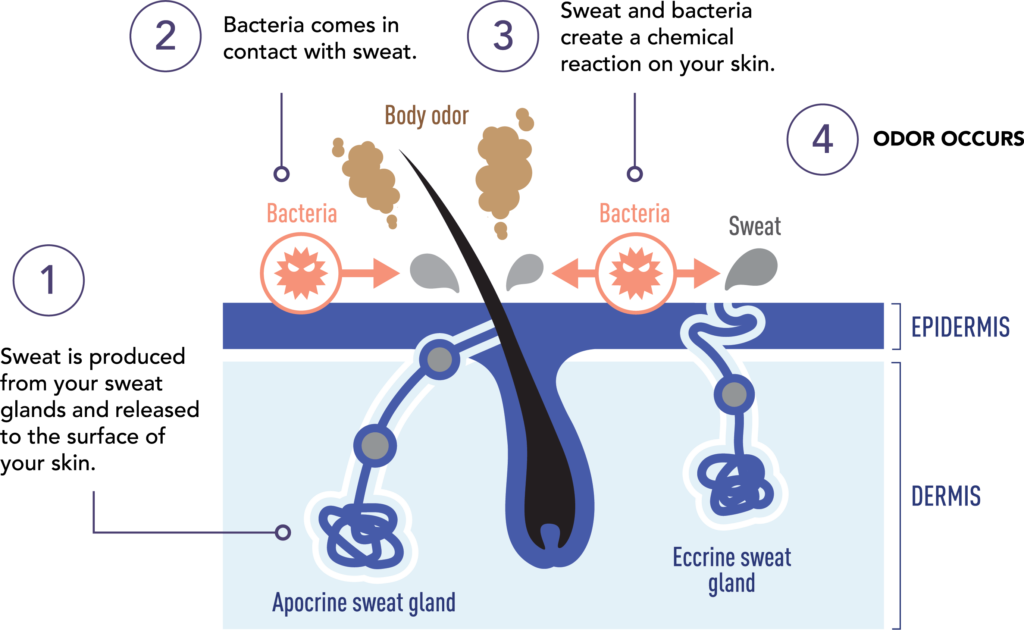
Eccrine Sweat Glands
Eccrine glands are found almost everywhere on the body and are primarily responsible for cooling the body through thermoregulation. These glands produce a mostly clear, odorless sweat made primarily of water and electrolytes.
Apocrine Sweat Glands
Apocrine glands are concentrated mainly in the underarms and groin. These glands become active during puberty and produce a thicker fluid that contains proteins and lipids.
Apocrine sweat itself is not what creates body odor. Odor develops when bacteria on the skin break down the proteins and lipids within the sweat.
This is why underarm odor and underarm sweating are often closely connected, but not exactly the same concern. Some treatments primarily reduce sweat, while others may also help reduce odor.
When Does Sweating Become Excessive?
Sweating is normal, but for some people it becomes excessive enough to interfere with daily life.
This may include:
- Frequently changing shirts
- Avoiding certain colors or fabrics
- Sweating through clothing
- Worrying about underarm odor
- Relying on antiperspirants that only help partially or temporarily
- Planning outfits around sweat marks
- Feeling uncomfortable in social or professional settings
Some people have medically diagnosed hyperhidrosis, while others simply feel their underarm sweating is beyond what feels manageable or comfortable for them personally.
Either way, treatment depends on the severity of sweating, whether odor is also a concern, and how much ongoing maintenance someone is willing to do.
Common Sweat Reduction Options
There are several different approaches to reducing sweat, and each works differently. Though these are meant to reduce sweating, some may help odor indirectly by reducing moisture.
Antiperspirants
Antiperspirants work by temporarily blocking sweat ducts near the surface of the skin. Aluminum-based ingredients form plugs within the ducts to reduce the amount of sweat reaching the skin’s surface.
Pros: Accessible, non-invasive, affordable.
Cons: Temporary, requires ongoing use, may cause irritation, may not be effective for heavier sweating.
Prescription Antiperspirants and Topical Medications
Prescription-strength antiperspirants contain higher concentrations of active ingredients. Other prescription topical medications may also be used to reduce underarm sweating by interrupting sweat signals at the gland level.
Pros: non-invasive, can help with moderate to severe sweating.
Cons : Temporary, requires ongoing use, may cause irritation and/or side effects
Prescription Oral Medications
Oral medications may be used when sweating affects multiple areas of the body. Because they work systemically, they may help broader sweating concerns but can also cause side effects such as dry mouth, dry eyes, constipation, urinary symptoms, blurred vision, or heat intolerance.
Botox for Sweating
Botox can be used to temporarily reduce underarm sweating by blocking the chemical signals that activate sweat glands. It is FDA-approved for severe primary underarm sweating that is not adequately managed with topical treatments.
Pros: Effective, non-invasive, minimal downtime.
Cons : Temporary, requires ongoing maintenance, expensive if not covered by insurance, and insurance coverage requires a hyperhidrosis diagnosis, prior authorization, and documentation of other failed treatments.
miraDry
miraDry is a non-surgical treatment designed to reduce underarm sweat and odor by using controlled thermal energy to target sweat and odor glands in the underarm area.
Unlike antiperspirants, topical medications, or Botox, miraDry is designed to provide permanent reduction because the treated sweat glands do not regenerate.
 Pros: Effective, non-invasive, permanent, minimal downtime, targets sweat and odor, can also reduce hair in the treatment area, no ongoing maintenance treatments.
Cons : Limited to the underarm area, temporary sweling, tenderness, numbness or tingling can occur while healing, some may require a second treatment depending on severity.
Surgical Sweat Reduction
Some surgical procedures for severe hyperhidrosis work by altering or interrupting nerves involved in sweat signaling. One example is ETS, or Endoscopic Thoracic Sympathectomy, which targets portions of the sympathetic nerve chain.
Other surgical approaches may focus more locally on removing or damaging sweat glands in the underarm area.
Pros: Effective, may be considered for diagnosed hyperhidrosis that has not responded well to other treatments.
Cons : Requires surgery, can permanently alter sweat-regulating nerve pathways, certain treatments (ETS) carry a risk of compensatory sweating.
What If Sweating Happens in More Than One Area?
This blog focuses mainly on underarm sweat and odor, but some people sweat heavily in multiple areas. When sweating is not limited to the underarms, or more severe in the underarms, treatment planning may look different.
For example, oral medications may be considered when sweating affects multiple areas, because they work more systemically. Iontophoresis may be helpful for hands and feet, but less so for underarm sweat.
This is why consultation matters. The best treatment depends on where sweating occurs, how severe it is, whether odor is involved, and whether the goal is temporary control or longer-term reduction.
What Is Compensatory Sweating?
Compensatory sweating refers to increased sweating in other areas of the body after certain sweat reduction procedures.
This can occur when surgical treatment options — such as ETS — disrupt portions of the sympathetic nerve pathways involved in sweat regulation. When these pathways are interrupted, the body may compensate by increasing sweat signaling through other intact nerve pathways.
As a result, sweating may increase in other areas of the body.
Common Misconceptions About Sweat Reduction
“If I get an underarm sweat/odor treatment, I’ll sweat more elsewhere.”
It depends on the treatment. This can happen with surgical options not treatments like antiperspirants, oral medications, Botox, or miraDry.
“Sweating removes toxins from the body.”
Sweating primarily helps regulate temperature. While trace substances can be found in sweat, the liver and kidneys are primarily responsible for filtering and removing waste products from the body.
“Reducing underarm sweat is dangerous.”
The body contains millions of sweat glands distributed throughout many areas. Reducing sweat in one localized area does not stop the body’s ability to cool itself normally. Underarms specifically only contain 2% of all sweat glands in the body.
“Body odor means poor hygiene.”
Body odor is influenced by sweat gland type, bacteria, hormones, genetics, medications, diet, and skin microbiome differences — not hygiene alone.
Final Thoughts
Sweating is normal and necessary, but excessive sweating can significantly affect comfort, confidence, and quality of life.
Understanding how the body sweats — and how different treatment options work — is important because not all sweat reduction methods function the same way.
Some treatments temporarily block sweat ducts. Some affect sweat signaling chemically. Some require ongoing maintenance. Others target sweat glands directly. Understanding the mechanism matters because each option has different benefits, limitations, risks, and maintenance requirements. The right option depends on the area being treated, the severity of sweating, whether odor is involved, and the patient’s goals.
Please note that this blog is strictly educational. ENIC offers Botox and miraDry for underarm sweating concerns as a part of our aesthetic services.
We are not contracted with insurance companies and do not prescribe medications for dermatologic conditions. For diagnosis, prescription medication, or insurance-based treatment, we recommend seeing a Dermatologist.